
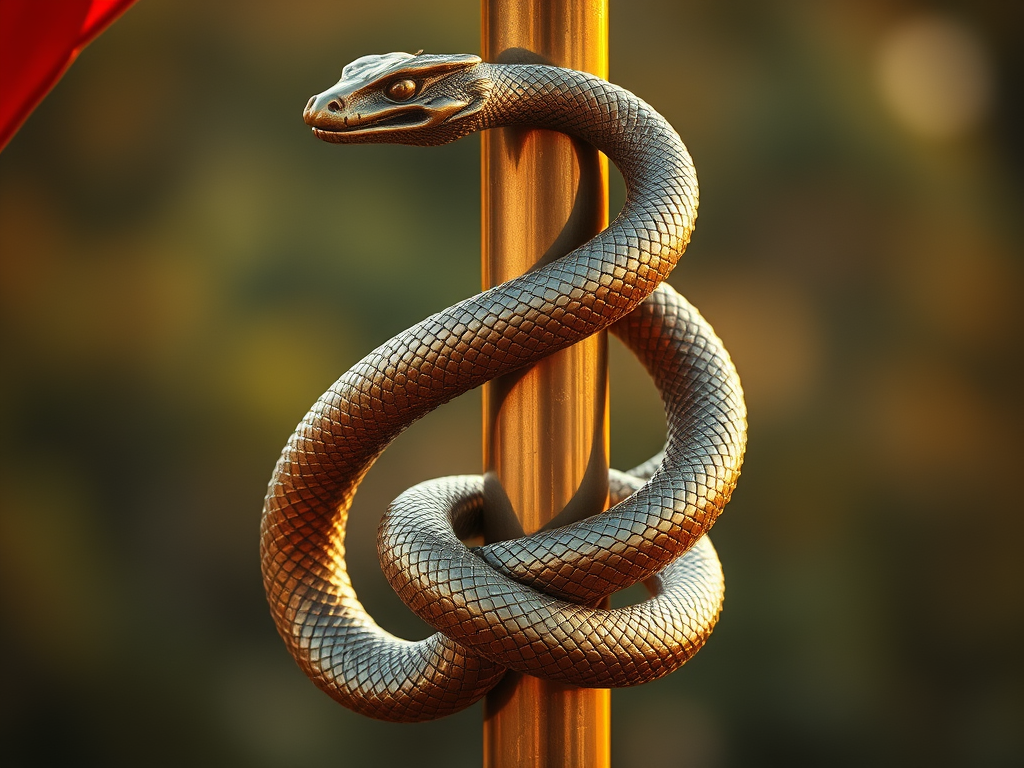
The story of the bronze serpent in Hebraic tradition offers a profound lesson on how our mindset shapes our reality. Created in God’s image, we have the free will to choose our thoughts, feelings, and words—each of which attracts experiences that reflect our mindset. Through this lens, the wilderness story of the Israelites complaining, encountering snake attacks, and their subsequent remorse becomes a powerful analogy for understanding how our inner attitudes shape the outer world, including the challenges we face.
In response to the Israelites’ plight, God instructed Moses to lift a bronze serpent on a pole, a symbolic act with a timeless truth: just as snake venom can hold its own antidote, the remedy to life’s difficulties is often found within the difficulties themselves. The venomous bite and the healing gaze were interlinked—by looking upon the serpent, the Israelites were invited to recognize that their troubles, and their healing, came from within. The serpent represented their power to transform suffering through a change in attitude: from complaint to gratitude, from fear to trust.
God’s law operates with kindness and mercy, allowing us to attract what we believe. When we embrace love, faith, gratitude, and service, we welcome positive experiences into our lives. Conversely, when we dwell on fear, resentment, or victimhood, we attract more of the same. This isn’t a punishment, but an invitation to learn and grow.
The bronze serpent serves as a reminder of the power of mindset and the healing potential within every challenge. When we face difficulties, the solution is often found by looking at the challenge itself with genuine curiosity and openness. Just as snake venom contains the antidote to its poison, the answers we seek are often contained within the challenges we encounter.
A closer look at the original Hebrew in Numbers 21:6-8 deepens this lesson for both personal and collective growth. The verb ראה RA’AH, traditionally translated in English as “to gaze” or “to look upon.” However, in the original Hebrew, RA’AH carries a deeper meaning: “to learn about,” “to consider,” and “to distinguish.” This suggests not merely looking, but truly examining the challenge, finding wisdom through humble, focused self-reflection.
The snake, as a totem animal, embodies transformation and renewal. Just as a snake sheds its skin to grow, we, too, are called to release old versions of ourselves, continually evolving. The serpent’s venom, containing its own antidote, symbolizes that within life’s trials lie the keys to healing and growth.
Through the brazen serpent, ancient Israelites encountered a creature carrying life’s mysteries within its form. They were invited to contemplate its paradoxes: the snake’s ability to shed and renew, its venom that can both harm and heal, and the wisdom in facing challenges that mirror our potential for transformation. By studying this symbol, they—and we—are encouraged to seek lessons within life’s trials, understanding that the solutions we seek are often hidden within the challenges we face. This story urges us to look inward, align our mindset with the teachings of the Hebrew Bible, and discover that within every problem lies the potential for healing and transformational growth.


Have you been inspired? Let me know!